
January 23, 2026 – D&L Industries, through its subsidiary D&L Polymer & Colours, Inc. (DLPC), announced a new milestone in its sustainability efforts with the launch of a 100% abaca pellet that is ready for direct use in plastics compounding. This advancement builds on the company’s breakthrough last year, when DLPC first demonstrated the feasibility of incorporating natural fibers like abaca into plastics—an innovation that, at the time, required DLPC to manage all compounding and downstream application work in-house. The latest development marks a significant evolution: instead of DLPC exclusively processing the fibers into composite materials, the company can now supply abaca in a standardized pellet format that upstream plastic compounders can blend directly into their own formulations. This shift dramatically widens potential applications and enables far more scalable adoption across the plastics value chain.
The new pellet technology transforms abaca—abundant, renewable, and considered the strongest natural fiber in the world—into a ready-to-use additive that fits seamlessly into the manufacturing processes of plastic compounders and processors.Screen Recording 2026-01-06 at 1.25.52 PM 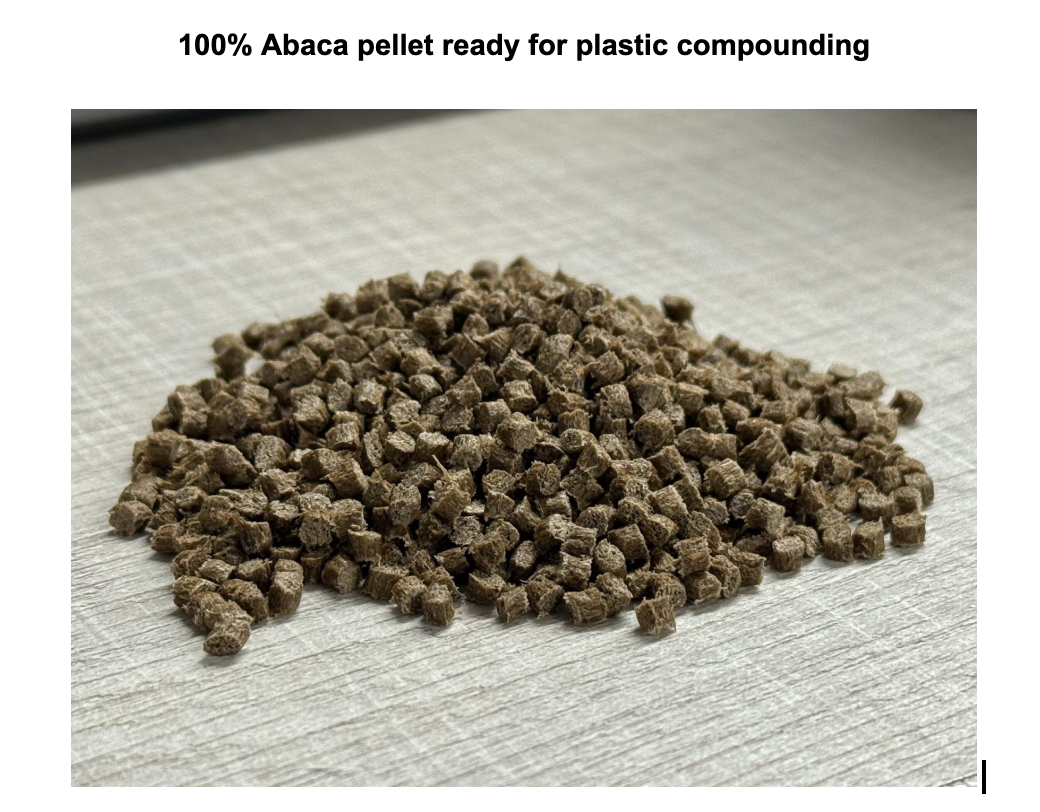
“Pelletization is the tipping point that finally makes natural fibers easy to use at scale. With a ready-to-compound 100% abaca pellet, manufacturers can incorporate sustainability into their products without changing their processes, opening an entirely new market where abaca can be handled just like any conventional polymer ingredient. Our proprietary technology can also work with other locally sourced fibers such as pineapple, bakong, and vetiver, further expanding the country’s potential to supply high-value bio-based materials,” DLPC President & CEO Lester Lao remarked. 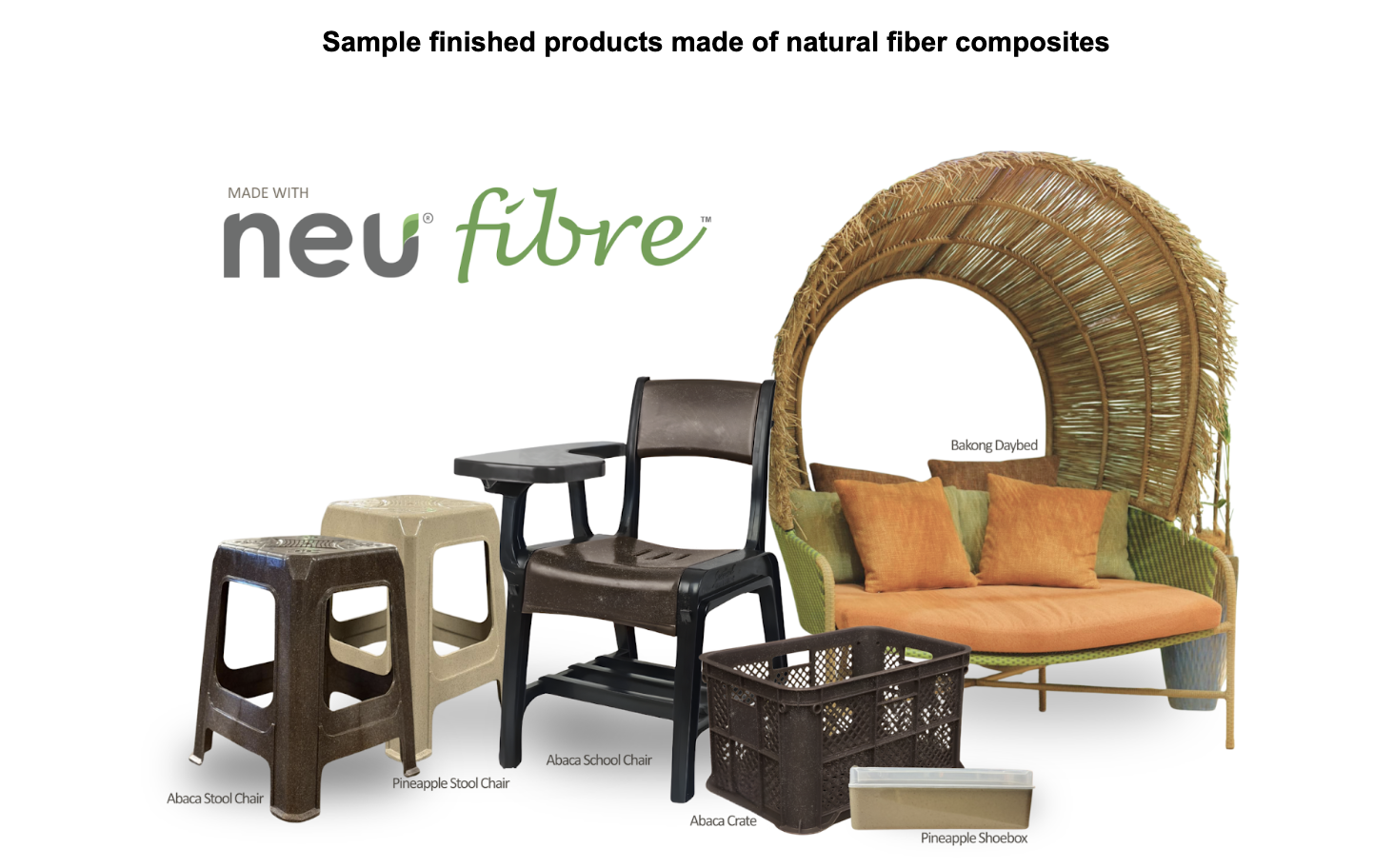
Natural fiber composites offer inherent advantages that complement and enhance the mechanical and chemical performance of traditional plastics while significantly improving sustainability. These materials exhibit strong and resilient characteristics and remain lightweight—light enough to float in water—making them suitable for a wide range of applications. With these unique properties, natural fiber composites can be used across diverse sectors, from everyday consumer durables to more demanding industrial uses in construction, automotive components, and other engineered products. At the end of their life cycle, products made with natural fiber composites can enter conventional recycling or waste diversion systems, and depending on the formulation, can also be made compostable to support greater circularity.
From a broader sustainability perspective, the implications are considerable. Natural fiber composites produced using these pellets can replace a meaningful portion of virgin polymers—with current formulations allowing dosing of up to 40% and the potential to go higher as technology advances—reducing dependence on fossil-based plastics while delivering improvements in strength, durability, and weight efficiency. The transition from DLPC-centric compounding to a pelletized, market-ready input greatly accelerates the integration of natural fibers into mainstream production, aligning with global efforts to reduce plastic consumption and environmental impact.
DLPC is currently collaborating with manufacturers across consumer goods, packaging, construction, and automotive sectors to develop practical applications using the new abaca pellet. The company is ramping up market education initiatives and joint development programs to guide partners through the transition to natural fiber–enhanced materials.
“This milestone marks a new chapter in our natural fiber journey. What began as an idea decades ago has now evolved into a commercially viable material that can help industries meet their sustainability goals, and we believe this is just the beginning of what natural fibers can achieve for the future of plastics. As we move toward broader commercialization, the 100% abaca pellet represents a transformative step toward a more sustainable, fiber-integrated plastics ecosystem,” Lao concluded.
-end-
D&L Industries is a Filipino company engaged in product customization and specialization for the food, chemicals, plastics and consumer products ODM industries. The company’s principal business activities include manufacturing of customized food ingredients, specialty raw materials for plastics, and oleochemicals for personal and home care use. Established in 1963, D&L has the largest market share in most of the industries it serves, as well as long-standing customer relationships with the Philippines’ leading consumer and manufacturing companies. It was listed on the Philippine Stock Exchange in December 2012. For more information, please visit https://www.dnl.com.ph/investors/.
This press release may contain some “forward-looking statements” which are subject to a number of risks and uncertainties that could affect D&L’s business and results of operations. Although D&L believes that expectations reflected in any forward-looking statements are reasonable, D&L does not guarantee future performance, action or events.
INVESTOR RELATIONS CONTACT
Crissa Marie U. Bondad
Investor Relations Manager – D&L Industries Inc.
+632 8635 0680
crissabondad@dnl.com.ph / ir@dnl.com.ph